





80th Anniversary Special Edition
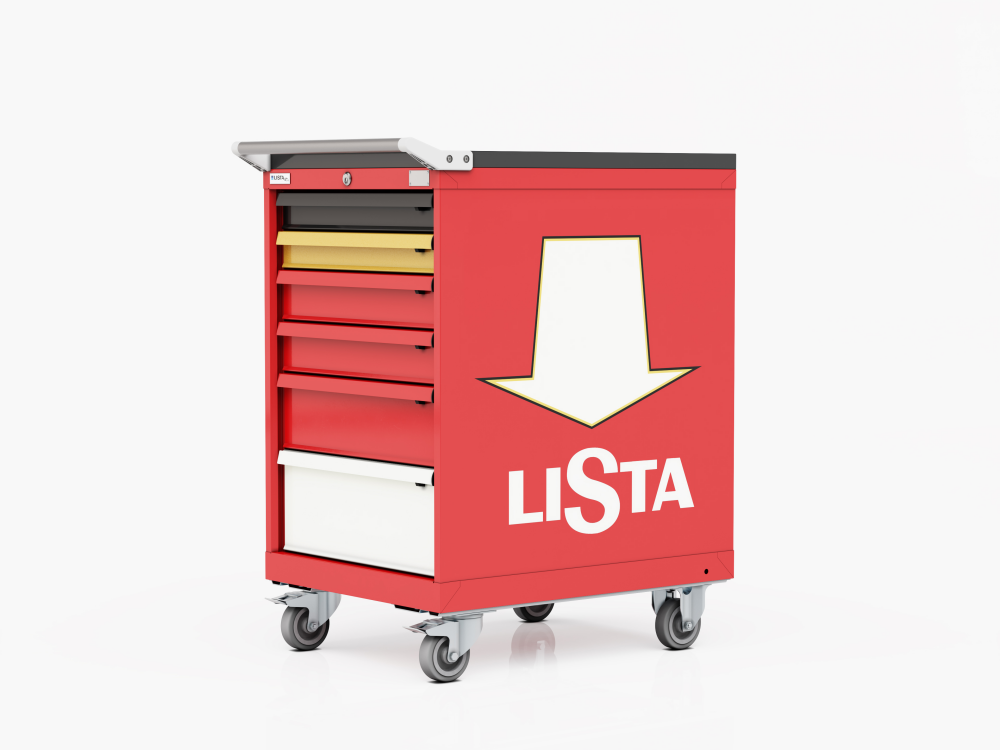
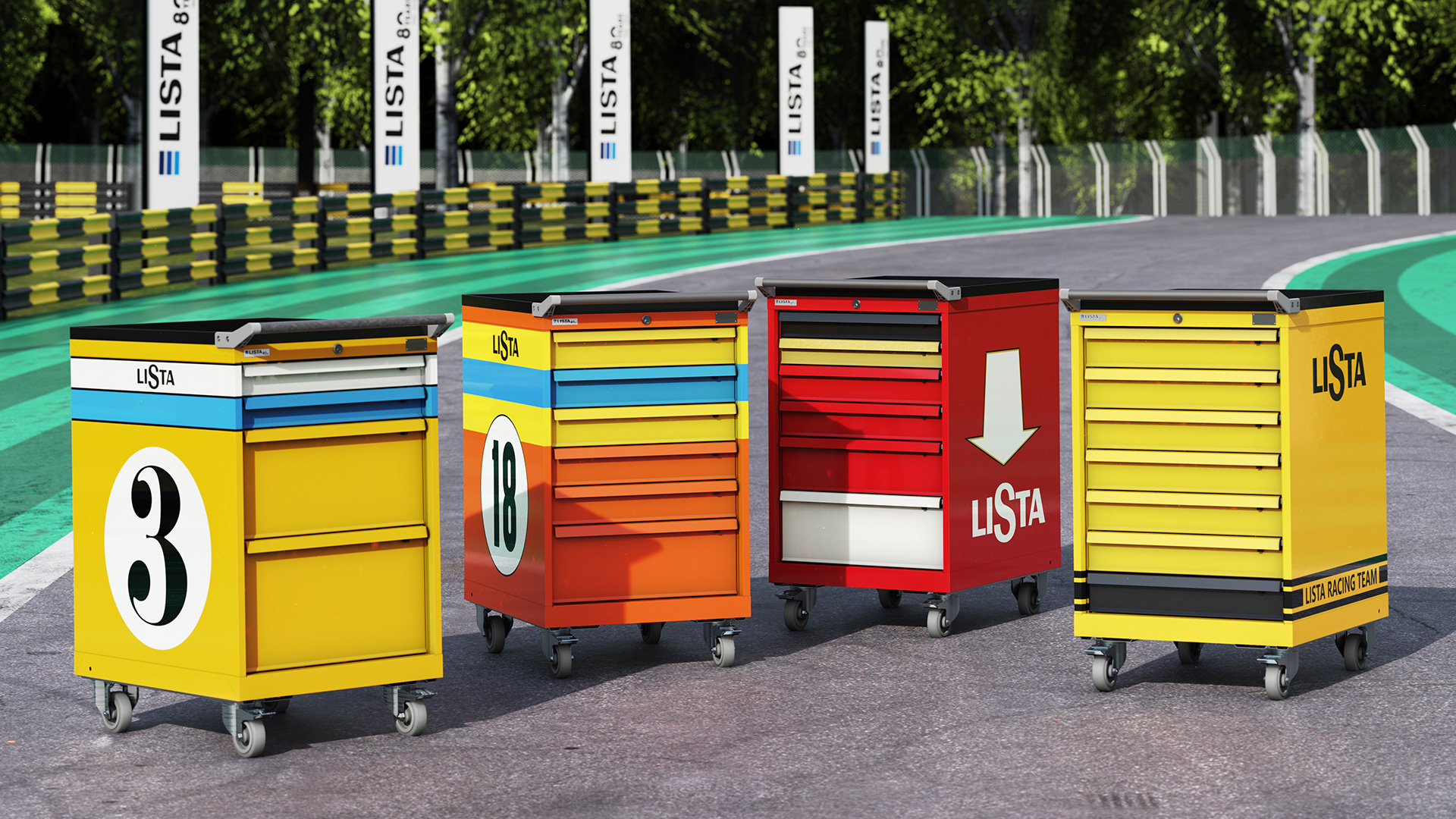
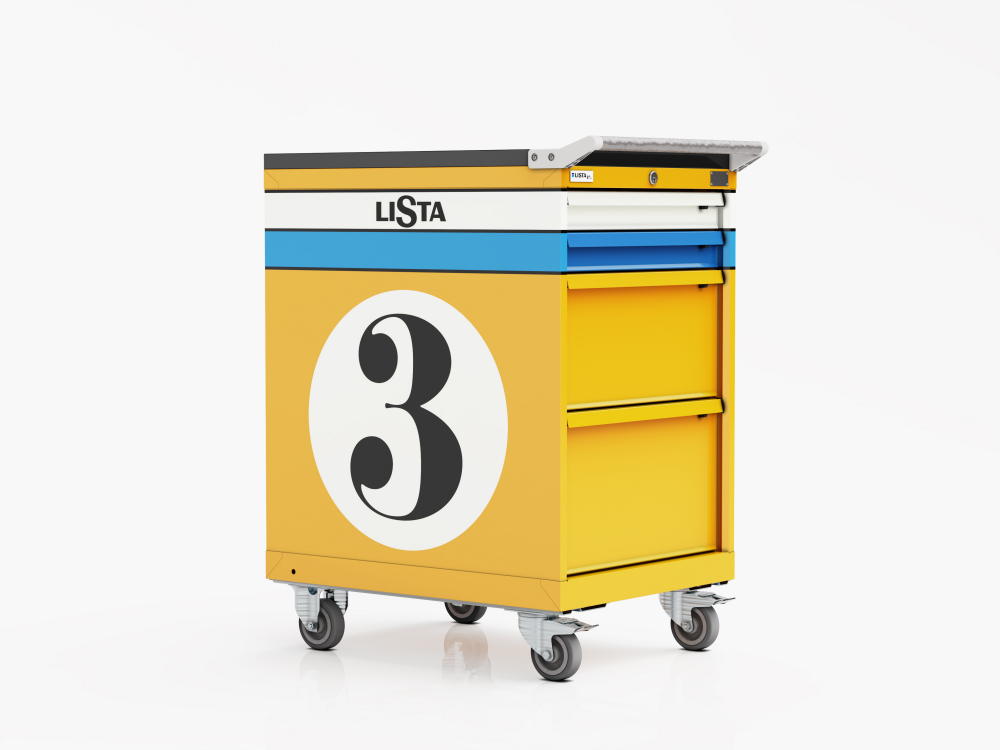
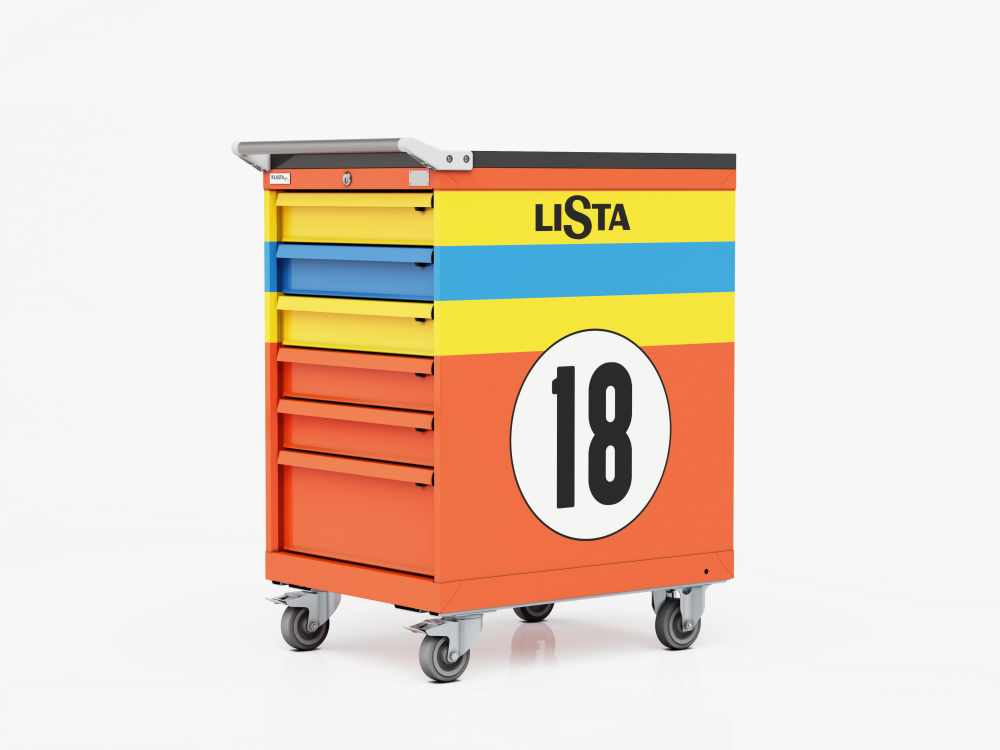
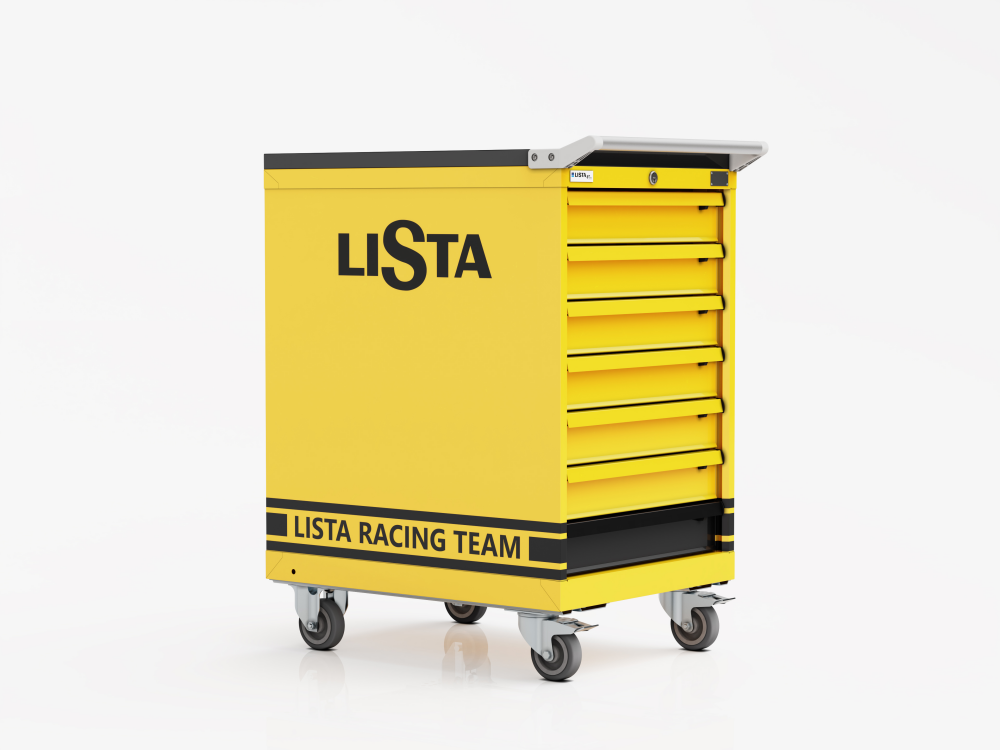
Limited special edition – workshop trolley in racing design
To mark LISTA’s 80th anniversary, the company is presenting an exclusive workshop trolley in a limited special edition – inspired by motorsport and the former LISTA owner and passionate racing driver Fredy Lienhard. With striking colours and lettering, robust build quality suitable for workshop use, and individual numbering, this collector’s item combines racing spirit with functionality and precision. A highlight for technology and motorsport enthusiasts.
Advantages at a glance
- Colours and lettering inspired by iconic vehicles from racing history
- Robust construction for the rigours of everyday workshop use
- Limited edition – a genuine collector’s item, individually numbered
The anniversary workshop trolleys are limited and only available in limited quantities!
1968
HAS3 FORMEL V
The history of the car
Engine, gearbox and front axle from the Beetle, a tubular frame with a plastic body - and the people‘s racing car was ready. Originating at the end of the 1950s in the USA, where the first race of the newly created „Formula Vee“ took place in 1962, the Formula Vee virus spread around the world to become the largest and most widespread formula class. Markus Hotz was a spectator at the first Formula Vee race in 1965 as part of the GP at the Nürburgring. Back at home, he started building his own cars and was soon visited by two racing enthusiasts: Fredy Lienhard and Bruno Wettstein. In a cellar at Lista AG in Erlen, the three of them soon built their own racing cars, together with Oscar Pfister. The Lista Racing Team was born. Fredy Lienhard secured first place in the 1969 Slalom with the Formula V in Lodrino.
1971 - 1973
HAS4 FORMEL SUPER V
The history of the vehicle
From 1971 onwards, the Formula Super V, featuring the air-cooled 4-cylinder boxer engines from the VW Type 4 (411/412), became the most popular racing series in Europe and the USA. In May 1971, Horag unveiled the HAS4. Between 1971 and 1974, 33 vehicles of the HAS4, HAS5 and HASE types were built and competed in both the Swiss Championship and international races. Horag’s works drivers included Bertil Roos and Harald Ertl. In 1973, the future Ferrari F1 World Champion Jody Scheckter set a new unofficial lap record for this class at Silverstone in a Horag Super V. At the ‘Grande Prêmio do Automóvel Club de Portugal’ in Estoril in 1972, the LISTA Racing Team, competing in Horag HAS4s, achieved a one-two-three finish: 1st Markus Hotz, 2nd Fredy Lienhard, 3rd Bruno Wettstein.
1971
911 SR 2.5
The history of the car
In 1967, the foundations were laid for one of the rarest and most sought-after 911 models, the Porsche 911 S/R. At that time, Porsche began developing the first 911 designed purely for motorsport, the 911 R. To meet homologation requirements, racing versions of the 911 S and 911 D were introduced alongside the 911 R, which competed in racing series in 1968 and 1969. These cars resembled the 911 R, but had slightly flared wheel arches to accommodate the wider 7-inch rear wheels. With the changes to the regulations in 1970, even wider wheels could be used, and the 911 S was further developed by Porsche. Porsche used this model as the basis for a very limited number of cars, which were developed specifically for GT racing and rallies and designated as the 911 SR.
1974
911 CARRERA RSR
The history of the car
The Porsche 911 Carrera RSR 3.0 was developed on the basis of the 911 Carrera RS 2.8. It was a Group 4 racing car designed for the World Manufacturers’ Championship. Distinctive features compared to its predecessor include the large air vents behind the front wheels and in front of the rear wheels, as well as on the rear wings. The engine of its predecessor has been enlarged to a full three litres and delivers 330 hp. The Porsche Carrera RSR’s career began at the 24-hour race in Daytona (Florida, USA) and was an instant success story: the Porsche Carrera RSR, entrusted to the American privateer team Gregg/Haywood for this endurance test, won unchallenged ahead of the more powerful prototypes from Ferrari, Matra and Mirage-Ford.